
What efficiency means in a condominium floor plan
A condominium can quote a large strata area and still live small. Learn how corridors, columns, balconies, bay windows and ledges affect usable space.
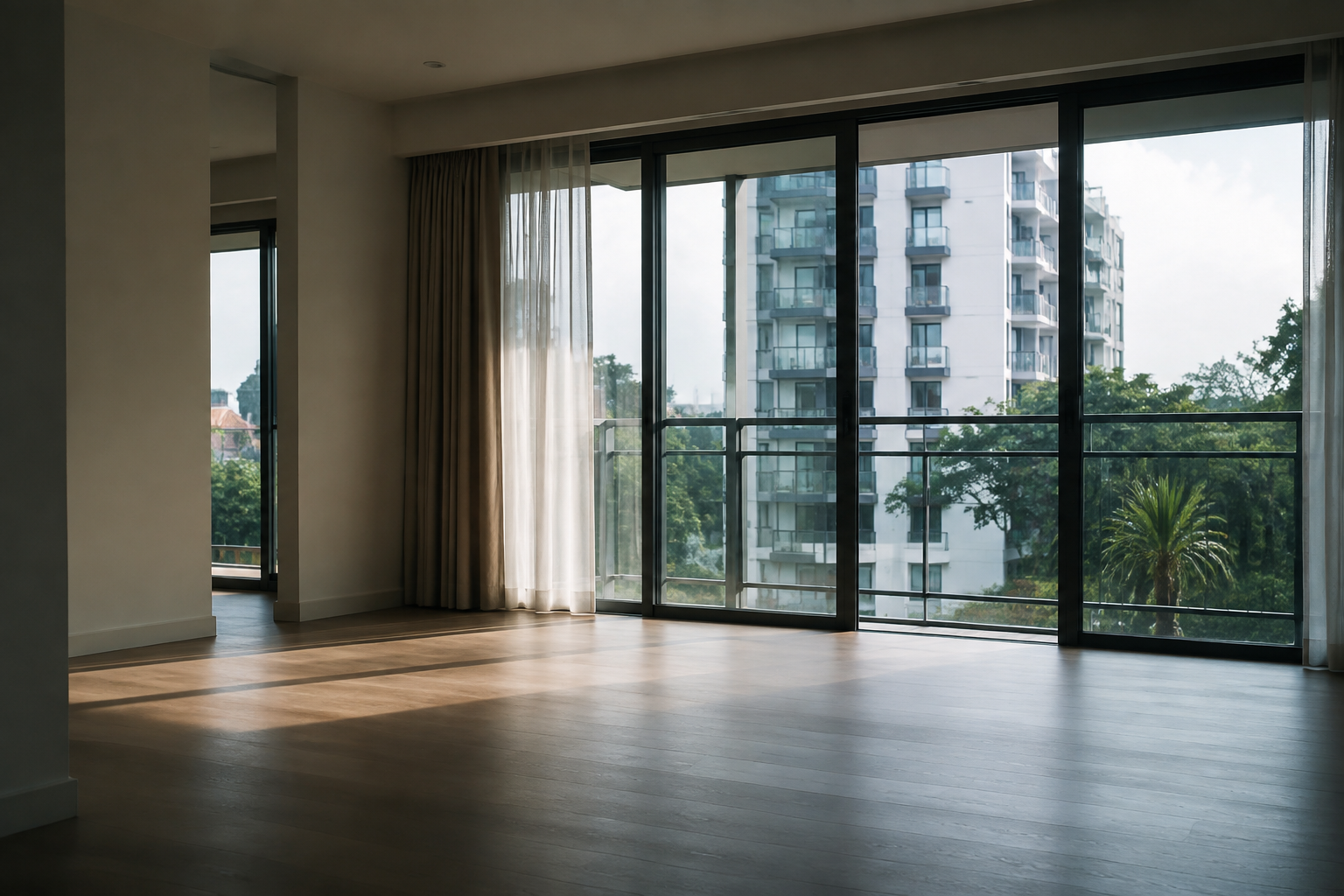
Strata area is not the same as usable living space
The number on a condominium listing is usually the strata area. That does not mean every square foot can hold a dining table, bed or storage cabinet. The Land Titles Strata Act requires strata plans to delineate lots and show approximate floor area, but that legal area is about ownership boundaries. It is not a promise that the whole area feels usable in daily life.
This is the heart of floor plan efficiency. A compact 1,100 sqft unit with a clean rectangle, short corridor and sensible room proportions can live better than a 1,250 sqft unit where too much area sits in passageways, unusable corners, deep bay window strips or oversized semi-outdoor areas. The price is often discussed on a per sqft basis, but the family lives on the usable part. That is why I mark a plan with a pencil before talking about value.
The comparison is similar in spirit to landed homes. In a terrace or corner terrace, land area and usable enjoyment are related but not identical. In a condominium, strata area and usable floor are also related but not identical. The buyer’s job is to find out where the quoted area has gone.
The usual signs of an inefficient plan
Long corridors are the first giveaway. A corridor is necessary, but it should not become a private hallway that eats the budget. Awkward columns are next. They can block wardrobes, force odd bed placement or turn a study nook into leftover space. Watch the swing of bedroom doors, the position of air-conditioning ledges, and whether the dining area is really a dining area or just a widened walkway between kitchen and living room.
Older condominium plans need a more careful eye because Singapore’s GFA rules changed over time. URA’s 2008 circular explained that bay windows and planter boxes had been exempted from GFA and sold as internal spaces, but would no longer be exempted for new applications from the stated effective date. The same circular noted that these features could be restrictive and impractical for some residents. If you are viewing an older unit, a bay window strip may appear inside the strata area but be poor space for furniture.
Balconies, private enclosed spaces and private roof terraces also need judgement. URA’s current guidelines cap total balcony size for each dwelling unit at 15% of the internal nett unit size, and balconies must generally remain semi-outdoor rather than being enclosed like internal rooms. A generous balcony can be wonderful for the right household. It can also make a unit feel smaller if the buyer mainly needs bedrooms, study space and storage.
- Trace the walking path from entrance to bedrooms and count wasted corridor length.
- Check whether columns interrupt beds, wardrobes, sofas or dining placement.
- Separate true storage from leftover corners that only look useful on paper.
- Ask whether balcony area suits your lifestyle or mainly inflates the quoted size.
- Look closely at older bay windows, planters and air-conditioning ledges.
New launch and resale plans ask different questions
For a new launch, you are reading a plan before the building exists. The show unit may be dressed to make circulation feel easy, but the floor plan tells you the discipline of the layout. Check actual room dimensions, furniture drawn to scale, air-conditioning ledge placement, structural walls and whether the kitchen can function when more than one person is inside. My new launch or resale condominium article covers the wider comparison; for efficiency, I focus on whether the quoted area becomes rooms you can use.
For resale, you have one advantage: you can stand in the real unit. Open wardrobe doors. Pull out dining chairs. Walk from the yard to the bedrooms. Notice where the current owner has avoided placing furniture, because empty corners often reveal unusable geometry. If the unit has been heavily renovated, ask whether carpentry is hiding a layout weakness or genuinely solving it, and read the condominium renovation rules before assuming walls or wet areas can move. Beautiful finishes do not change a poor structural grid.
Do not rely only on per sqft comparison. A cheaper psf unit can be expensive if 8% to 12% of the space is hard to use, while a higher psf unit with cleaner planning may give better daily value. I avoid printing a universal efficiency ratio because projects, eras and unit types differ. The better method is to compare two actual plans and ask where each square foot works.
How I read a plan before discussing price
I start by dividing the plan into living, sleeping, service and semi-outdoor areas. Then I mark circulation paths. After that, I look for trapped spaces: a study corner without privacy, a foyer too large for its purpose, a corridor wider than necessary, or a balcony too narrow for proper seating. URA’s GFA handbook is a reminder that development control area and liveable usefulness are not the same thing; GFA can include spaces regardless of whether they are accessible or usable unless exempted.
Next, I test the plan against the household. A couple who works from home may value a proper study more than a larger balcony. A family with a helper may need a service yard and proper utility space. An investor may care about bedroom usability, rental furniture placement and maintenance simplicity. A right-sizing owner from a landed home may underestimate how much storage has quietly been carried by a storeroom, car porch or spare room over the years.
The final price conversation should reflect this. Floor plan efficiency is not a decorative preference. It affects renovation cost, furniture cost, rental appeal, resale comparison and daily comfort. If a unit reads large and lives small, the offer should recognise that. If it reads modest but lives cleanly, do not dismiss it too quickly because the headline area is smaller.
What to take from this
- Compare usable room function, not only headline strata area.
- Older bay windows, planters and ledges can make a unit live smaller than its size suggests.
- Test the plan with furniture, door swings, storage and daily walking paths.
- Price inefficient layouts with renovation limits and resale appeal in mind.
Questions I get asked about this
Why is my measured floor area smaller than the strata area?
SLA explains that strata area is calculated from the middle of structural walls or boundaries unless the approved plan states otherwise. Measuring around internal wall faces can therefore produce a smaller number. The official area defines ownership boundaries, while your tape measure shows the space you feel and furnish.
Are balconies inefficient space?
Not automatically. A balcony is valuable if you use it for dining, plants, airflow or outdoor sitting. It is inefficient if it is too narrow, faces harsh afternoon sun, or takes area away from rooms the household needs more. URA also treats balconies as semi-outdoor spaces, so they should not be assumed to be enclosed living rooms.
Should I avoid all older condominium layouts with bay windows?
No. Some older units still have generous room sizes and good proportions. The point is to check how much of the quoted area is tied up in bay windows, planter strips or ledges. If those features reduce furniture placement or bedroom function, they should affect your comparison and offer.
Can renovation fix an inefficient floor plan?
Sometimes. Carpentry can improve storage and awkward corners, and a wall change may improve flow if allowed. But structural columns, service ducts, facade rules and wet-area positions may limit what can change. Read the plan together with the condominium renovation rules before assuming a redesign is simple.
Sources
- Land Titles Search — Singapore Land Authority
- Land Titles Strata Act plan requirements — laws.sg
- Gross Floor Area — URA
- GFA Related Matters — URA
- Changes to GFA Exemption Guidelines — URA
- Balconies and Private Outdoor Spaces — URA
- Strata-titled Residential — URA
Written by Karen Lim, CEA Registration Number R005794D, PropNex Realty Pte Ltd (CEA Licence Number L3008022J). Rules, rates and thresholds in Singapore property change; please confirm anything time-sensitive with the relevant authority or with me before you act on it.